Escaping the Carnival of Doom in Once Human: A Twisted Tale of Survival
The Carnival of Doom quest in Once Human's Junkyard traps players in a twisted game of Russian Roulette with the malevolent Chuckles.
The Junkyard had always been a place where the air tasted of rust and forgotten promises. But on that afternoon, beneath a sky smeared with the sickly orange of a dying sun, a single revolver sat on a crate like an unassuming key dropped into a world that was already too broken. For the lone wanderer — a scavenger who had faced all manner of monstrous aberrations — the gun was just another oddity. Until they reached out and touched the cold steel. Reality didn’t just fracture; it folded inward like a paper lantern being crushed by an invisible fist, and suddenly the train depot was gone.
The Carnival of Doom is not a quest that asks for permission. It abducts you. Even in 2026, when guides litter every corner of the net, newcomers still tumble into this psychedelic trap with the giddy horror of a moth spiraling toward a candle that smiles back. This isn’t a test of aim or brute force. It’s a puzzle wrapped in a madman’s riddle, and if you don’t know the steps, you’ll be playing Russian Roulette until the end of time — or at least until your patience runs out.
The Ride Into Madness
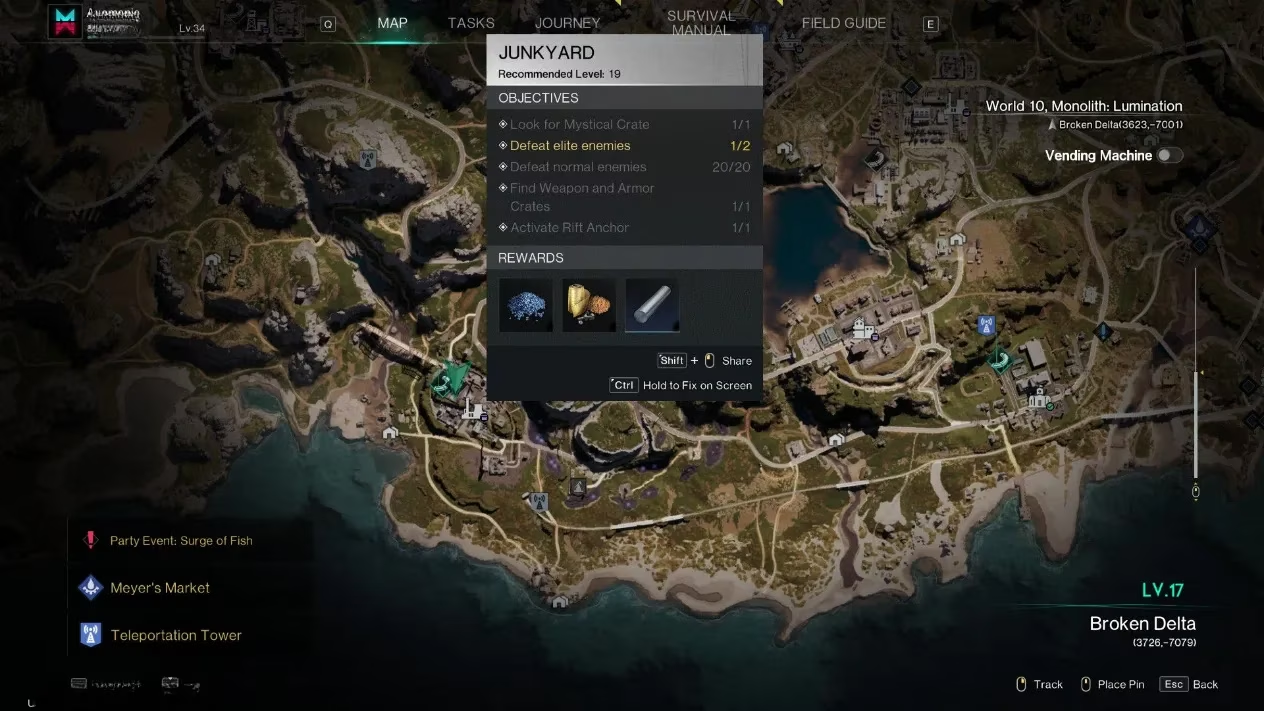
Finding the quest is deceptively simple. The Carnival of Doom hides in the southern reaches of the Once Human map, inside the Junkyard POI, a place crawling with Rosetta soldiers who treat the area like a personal fortress. It’s a level 10 quest nested inside a level 19 zone, which is the game’s quiet way of telling you to upgrade your weapons before you even think about stepping onto those oil-stained grounds. So our wanderer did exactly that — honed their gear, stalked through the scrap-metal labyrinth, and silenced the soldiers who were playing cards near the depot.
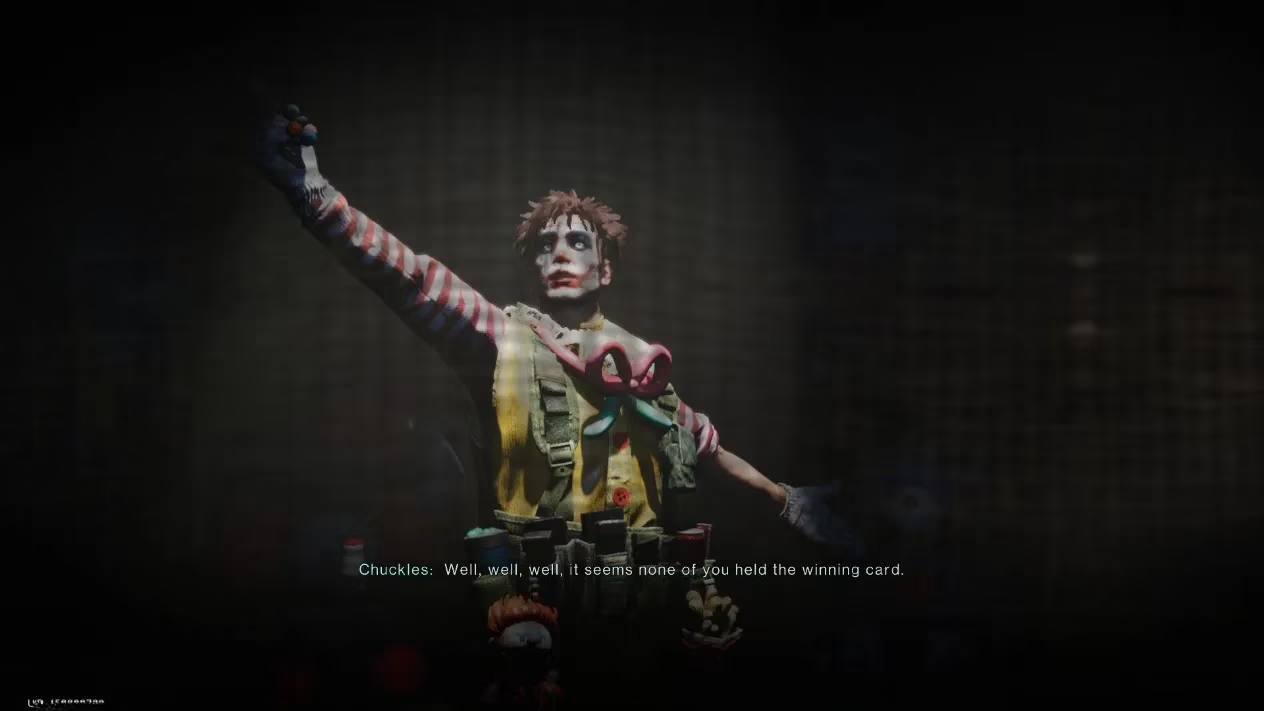
After the last body hit the gravel, the revolver still sat there on its crate, gleaming like a dare. When they interacted with it, the world blinked. One moment there were chain-link fences and shattered glass; the next they were standing in a giant playroom, a fever-dream nursery where the walls were painted with faded circus motifs and everything smelled of stale popcorn and ozone. Five other phantom figures stood frozen nearby, but none of them moved. They were just furniture for the scene. Then Chuckles appeared.
Chuckles the clown is a nightmare stitched together with grins and giggling malice. His voice dripped with the kind of cheer that makes your skin crawl, like a carillon of broken bells rung by a ghost. He was just itching to play a game: Russian Roulette, naturally. The bullet in the chamber wasn’t just a threat — it was a promise. And the first time the wanderer tried, the revolver clicked empty for Chuckles, and then barked directly into their skull. They woke up back at the start of the playroom, Chuckles’ laughter echoing like a skipping record. The game was rigged, and he knew it.
Breaking the Cycle
The trick to escaping this looping nightmare is not to out-shoot the clown, but to out-think the machine that keeps him winning. After that first death, the wanderer remembered the old survival instinct: when the rules don’t work, look behind the curtain. Pressing Q to scan the playroom illuminated the shadows like a lighthouse beam cutting through fog, and there it was — a cable, thick and pulsing with a sickly neon glow, slithering across the floor like a vein pumping poison into the heart of the game.
Following the cable was an act of quiet rebellion. It led away from the table where Chuckles twirled his revolver, away from the menacing red door at the far end of the room. When the wanderer tried to move forward, the clown’s painted smile twitched, and they told him they just needed some fresh air. The excuse was flimsy, a paper boat in a hurricane, but Chuckles was too arrogant to care. The cable ended at that big red door — a maw that looked less like an exit and more like the gullet of a mechanical beast. Beyond it was a hallway, narrow and humming, filled with the clank and hiss of hidden machinery.
At the end of the hallway stood a henchman, a greasy figure hunched over a console like an organist at a cursed cathedral. This was the source of the cheat: a machine that manipulated the very revolver Chuckles waved around, deciding when the bullet would land in your chamber and when his would stay empty. The wanderer didn’t hesitate. They closed the distance and put the operator down with the kind of efficient violence that comes from weeks of surviving aberrations and desperate firefights. With the henchman crumpled on the floor, the machine became available — an intricate mess of dials, wires, and spinning cylinders that hummed like a malicious orchestra tuning up for a symphony of doom. A few quick interactions flipped the script. Now the machine worked against its master.
Armed with a silent ally in the walls, the wanderer walked back to the playroom, the revolver feeling heavier in their hand. Chuckles was still grinning, still crooning something about luck and fate. But when the cylinder spun this time, fate had a new favorite. The gun fired, and instead of a shower of blood, the clown’s body collapsed in on itself, transforming into a small, stitched-together voodoo doll — a Deviation that pulsed with dark, playful energy. The wanderer scooped it up, feeling the faint tremor of magic in its threads. A grim trophy, but a useful one.
Aftermath
The moment the game ended, reality snapped back like a rubber band stretched too far. The wanderer stood once again in the Junkyard depot, the stench of gunpowder and rust flooding their senses. But they weren’t alone. In the brief time they’d been trapped in Chuckles’ pocket dimension, the Rosetta soldiers had respawned, their patrols as predictable as the tides. Bullets started flying before the wanderer could even get their bearings, and the aftermath of the carnival bled directly into another firefight. Such is life in Once Human — there’s rarely a moment to catch your breath.
The Voodoo Doll Deviation is more than a trinket. It becomes a companion, a floating charm that can turn the tide of a battle by debuffing enemies or absorbing a fatal blow. But its real value is the story it carries: a testament to the fact that not every threat in this shattered world comes with teeth and claws. Sometimes, it’s just a clown and a rigged game, waiting in a playroom where the walls are too bright and the laughter never stops.
In the years since the game first launched, the Carnival of Doom has become a rite of passage. Players whisper about it in camps and trade routes, sharing the secret of the cable and the henchman as though it were buried treasure. The revolver still rests on its crate in the Junkyard, untouched by time, ready to swallow the next unsuspecting soul who gets too curious. And if you ever find yourself holding that gun, remember: the game is always rigged, but you can always find the strings.
Leave a Reply
Comments