My Journey Through the Melting Pot: How Once Human Blends The Division's Grit with Fallout's Soul
Once Human masterfully blends cover-based combat inspired by The Division with dynamic base-building akin to Fallout 76, creating an unforgettable gaming experience.
I step into the ruined world of Once Human, and the air itself feels borrowed yet entirely new. It's 2026, and the landscape of gaming is vast, yet here I am, holding a controller that vibrates with the echoes of other worlds. This isn't just a game; it's a chimera, a beautiful, terrifying fusion of genres that somehow, against all odds, finds its own unique heartbeat. To call it a melting pot of influences feels like an understatement—it's a grand, chaotic symphony where every note is familiar, but the melody is one I've never heard before.
The Ghost of The Division in a Mutant's Shadow
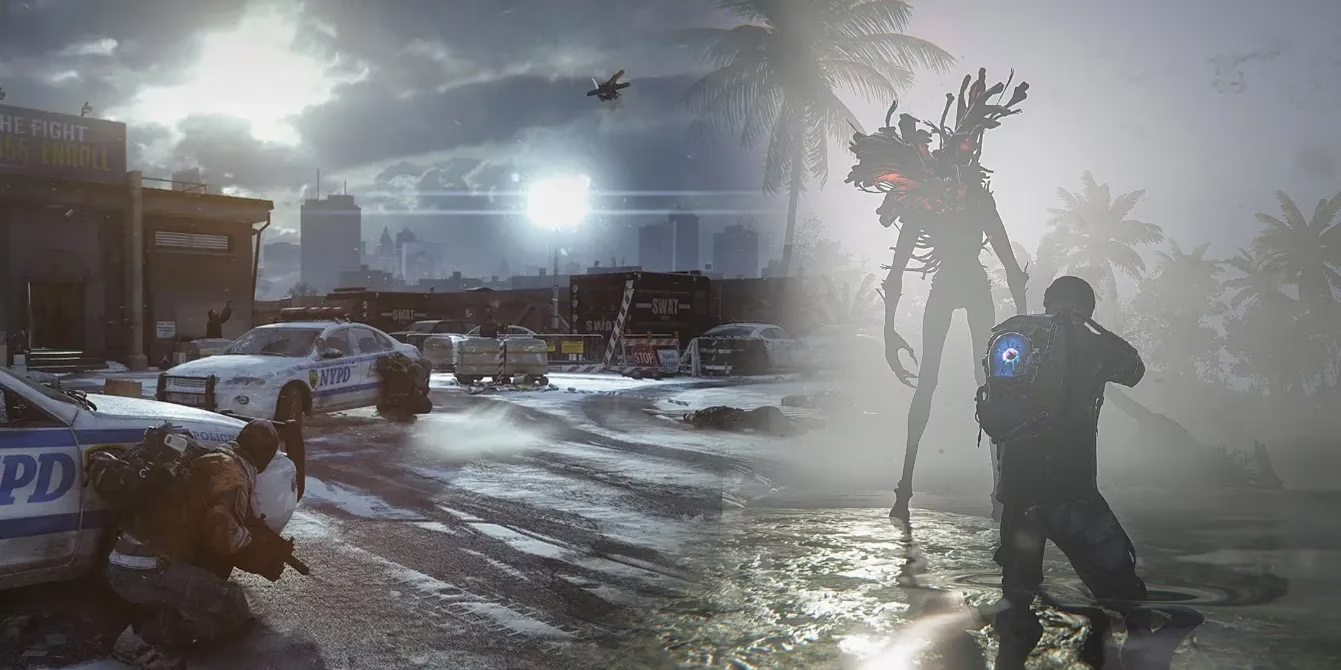
From the very first moment I took cover behind a crumbling wall, the ghost of Tom Clancy's The Division whispered in my ear. The weight of the character, the satisfying thunk of a well-placed shot, the obsessive scanning for that next piece of loot—it's all there, a comforting and expertly borrowed foundation. The cover-based combat isn't just a suggestion; it's a necessity for survival, a dance of peek-and-shoot that feels as tight and responsive as its clear inspiration. But oh, how the palette has changed. Where The Division had me fighting rogue agents in the snow-blanketed streets of New York, Once Human throws me against the Deviants—otherworldly, horrific mutants that turn every corner into a potential jump-scare. The urban decay is traded for sprawling, eerie vistas, less cluttered but far more haunting. The loot mechanics are a spiritual sibling, though here I'm not just hunting for a better vest; I'm desperately scavenging for a can of beans and some duct tape to keep my shelter standing. It's the same addictive loop, but the stakes feel raw, visceral, deeply personal.
Building a Home with Fallout 76's Blueprint
Yet, when the firefight dies down and I retreat to my makeshift base, another influence settles over me like a familiar dust. This is where the soul of Bethesda's Fallout 76 truly bleeds through. The act of building, crafting, and farming isn't just a side activity; it's the core of my existence. I find myself falling into the same rhythms: scrap, build, defend, repeat. There's a profound sense of ownership here that Fallout 76 perfected. However, Once Human takes this blueprint and builds a taller tower upon it. While Fallout 76's world—the iconic Wasteland—offers incredible biome variety, Once Human's narrative engine is its true masterstroke. Its story evolves through Seasonal Scenarios, a living, breathing plot that grows with me. In contrast, Fallout 76's seasonal updates often felt like adding new rooms to a static house. This dynamic model gives Once Human a crazy advantage in longevity; it's not just a world to visit, but a story that refuses to let me go.
Here’s a quick breakdown of how these giants compare in my experience:
| Feature | Once Human's Take | The Division's Vibe | Fallout 76's Flavor |
|---|---|---|---|
| Combat Core | Tight, cover-based TPS vs. mutants & monsters. | Tight, cover-based TPS vs. human factions. | More RPG-focused VATS & real-time blend. |
| World Feel | Open, eerie, less urban, tinged with cosmic horror. | Dense, claustrophobic, ultra-urban decay. | Varied biomes (Forest, Ash Heap, Mire) in a nuclear wasteland. |
| Progression Drive | Survival loot (food, materials) + gear. Story evolves seasonally. | Gear, gear, and more gear. Narrative is largely static. | Gear & legendary effects. Narrative expanded via side stories. |
| The Hook | "Can I survive the night and this week's new story twist?" | "Can I get that god-roll SMG?" | "Can I build the coolest C.A.M.P. and find a rare plan?" |
A Unique Alchemy: Why This Fusion Works
So, how does this Frankenstein's monster of game design not just walk, but run? It's in the alchemy. Once Human isn't a cheap copycat; it's a discerning curator. It takes the polished, tense gunplay from The Division—the thing that makes firefights feel oh-so-satisfying—and marries it to the deep, systemic survival and base-building of Fallout 76. It then wraps this robust gameplay core in an ever-changing narrative wrapper that neither of its inspirators ever truly committed to. This isn't just borrowing; it's synthesizing. It understands that the heart of a looter-shooter and the soul of a survival-crafter aren't mutually exclusive; in fact, they hunger for each other. The drive to find a better weapon perfectly complements the drive to secure a safer homestead.
Playing in 2026, the game's success makes perfect sense. In an era where live-service games often feel like a grind-fest, Once Human uses its blended DNA to offer variety. If I'm tired of shooting, I can farm. If I'm lonely in my base, the shared world and seasonal events pull me back into collaborative action. It dodges the monotony that plagued parts of Fallout 76's early days by ensuring the why behind my actions is constantly being refreshed.
The Verdict from the Wasteland
In the end, standing on the roof of my creaking base, looking out at the twisted landscape, I don't just see a copy of another world. I see a testament to intelligent game design. Once Human had the guts to look at two gaming titans—the gritty, tactical Tom Clancy's The Division and the expansive, quirky Fallout 76—and ask, "Why not both?"
The result is an experience that is, frankly, one-of-a-kind. It's a game that can give me the adrenaline-pumping, cover-based firefight of my dreams and, minutes later, the meditative peace of planting crops on my polluted land. Its influences are its greatest strength, not a weakness, because it blends them with purpose and vision. For any wanderer who has felt the chill of The Division's streets or the sun (or rad-storm) on their back in Appalachia, Once Human is not just a recommendation; it's the next logical, and brilliantly twisted, step in the journey. It's proof that from many old parts, something thrillingly new can be born.
Leave a Reply
Comments