Once Human Customania Architect Event: Cozy Towns, Floating Marvels, and Voyages Beyond
The Customania Architect Event in Once Human offers creative custom server builders a chance to design Cozy Towns, Floating Marvels, and more.
In the dusty reaches of the Custom Servers, a different kind of storm was brewing in March 2026. It was not made of bullets or mutant howls, but of blueprints, beams, and boundless imagination. A lone builder known as Kai stood at the edge of a player-made settlement, watching the official server restrictions dissolve like morning mist. Here, the rules were his to write. The Customania Architect Event had arrived, and with it came a chance to turn the wasteland into a gallery of impossible structures.
The call was simple: gather your tools, choose a theme, and build something unforgettable. The event opened its first phase on March 27 and would keep the workshop doors open until April 16 at 18:00. During those weeks, every custom server became a canvas. For those unsure of which world to enter, the organizers recommended several regional servers: NA 10101831184, EU 12101831098, SA 11101831021, SEA 16101831045, KR 14101831072, JP 13101831020, and HMT 15101831052. Kai jotted down the SEA number and stepped inside.
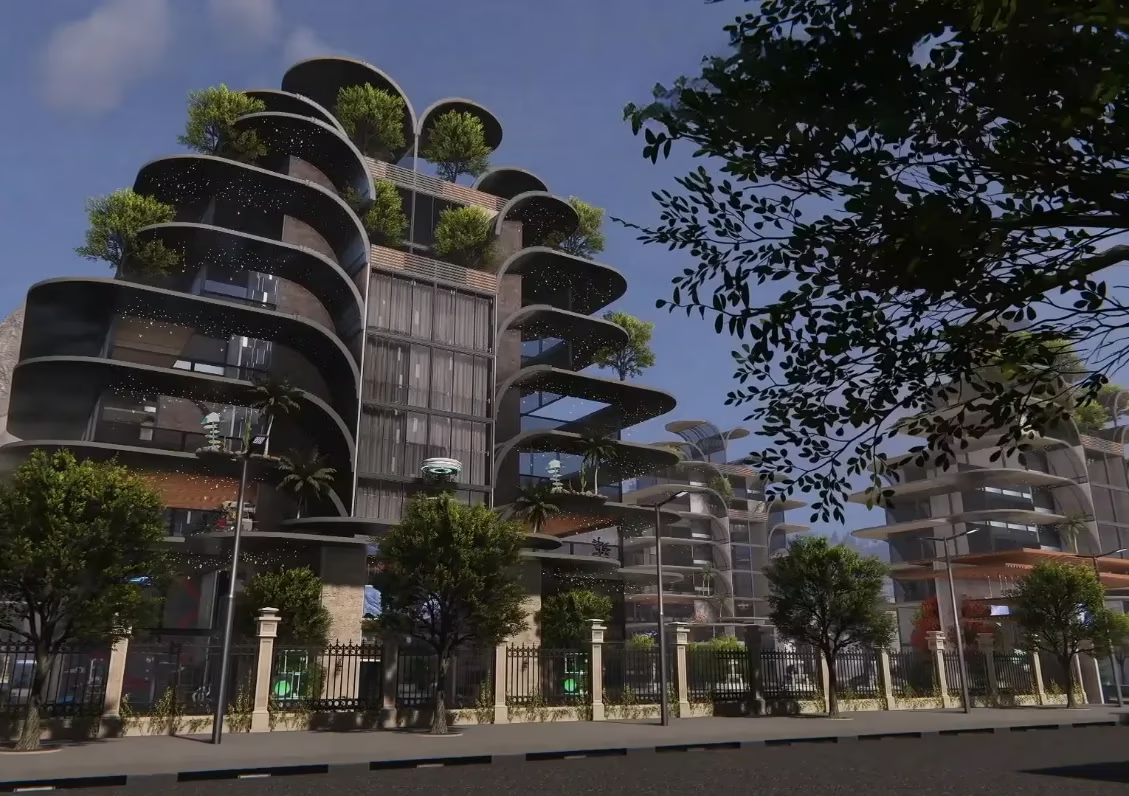
Three themes awaited the builders. The first was Cozy Town, a group challenge for teams of two to ten players. The goal was not merely to stack walls but to create an architecturally cohesive cluster of structures, a place that felt like a settlement with a heartbeat. The reference image showed a warm, cluttered hamlet, credited to Wangzai Xianyu with a video by Sheng Yu.
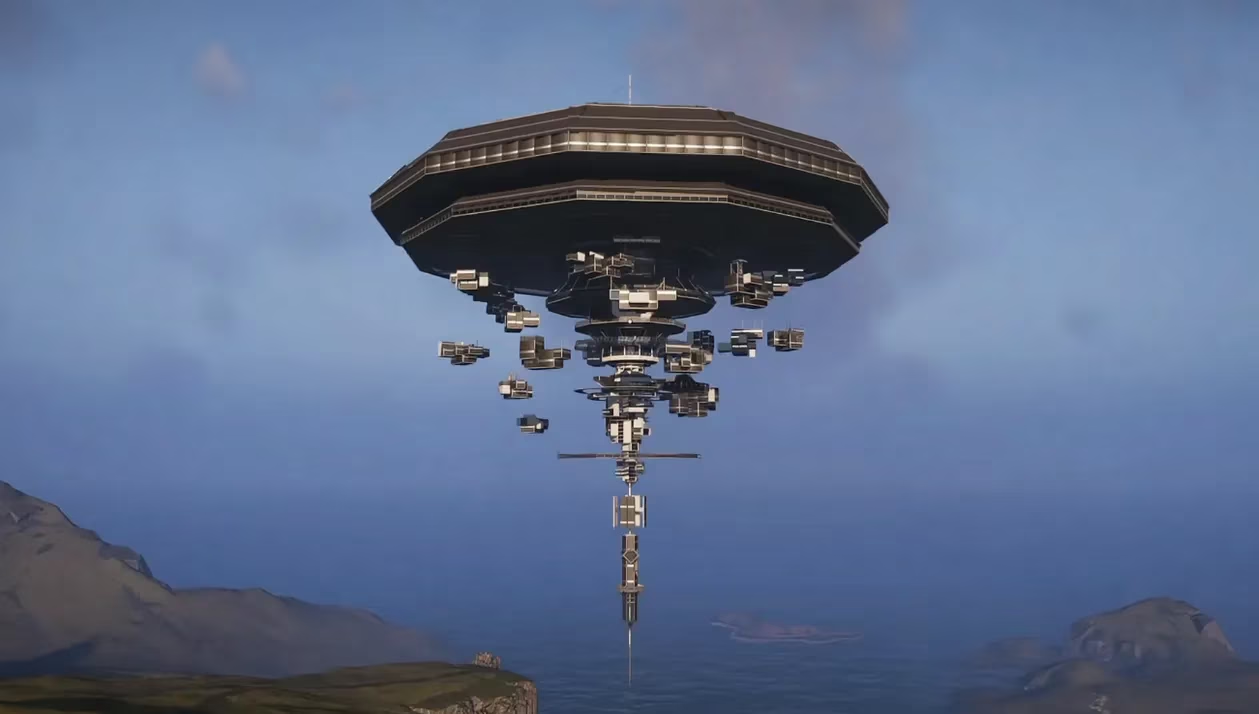
The second theme, Floating Marvels, demanded a solo act. The main structure had to appear to float, with no direct contact to the ground or any natural feature. It was a test of visual illusion and structural creativity. Kai imagined a levitating garden held aloft by nothing but shattered sky.
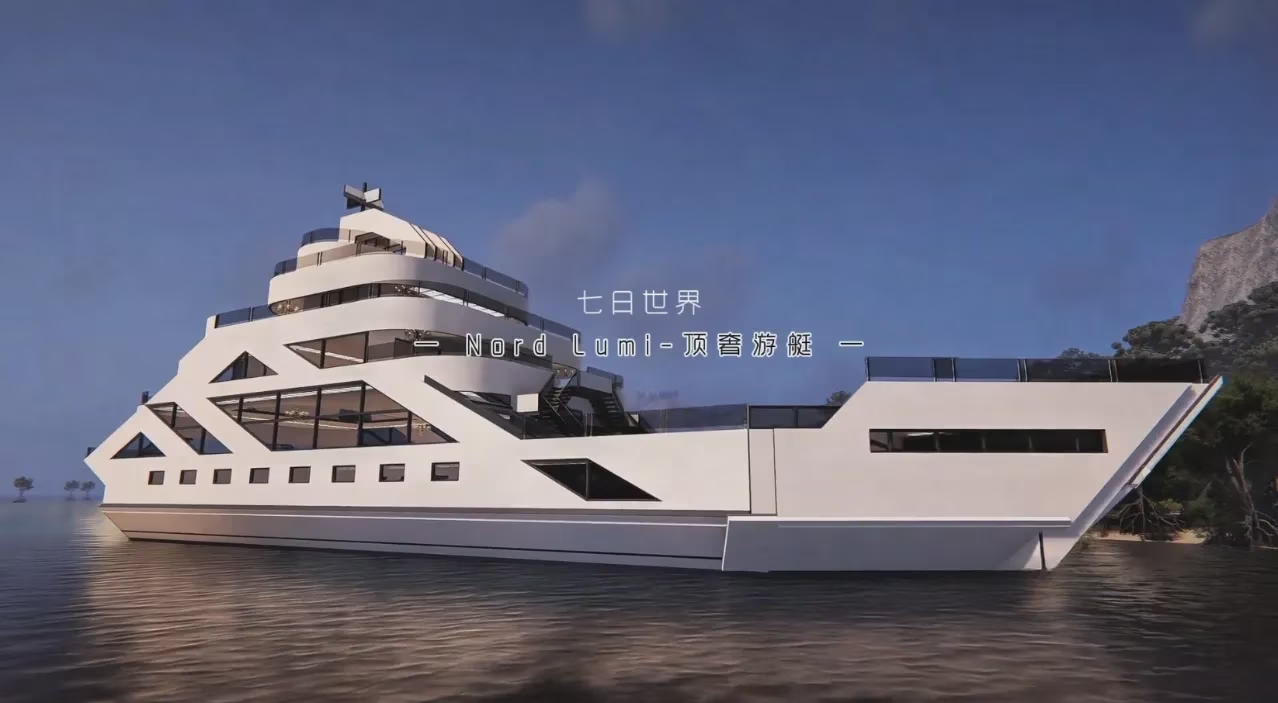
The third theme, Voyage Beyond, invited solo builders to shape something distinctly like a ship or spaceship. The reference image by Lin Qiye showed a vessel that looked ready to leave orbit or sail across a sea of sand.
Kai chose Floating Marvels. The submission process had two steps. First, he had to post a photo or video of his creation on a designated social platform—X, TikTok, Facebook, or YouTube—with the hashtags #OnceHuman and #CustomaniaArchitect. Posting to multiple platforms was encouraged, though only the single post with the highest engagement would later be counted. Second, he had to scan a QR code or use the official submission form, fill it out, and paste the social media link of his creation. Each creation could only enter one theme, and the link had to remain public and accessible until the event ended.
After the dust settled on April 16, Phase 2 began on April 18 and ran through April 20. The top twenty entries in each theme were ranked by social media engagement—likes, shares, and comments. From those twenty, five finalists were selected for public voting. Players could vote through a questionnaire sent via in-game mail or on official social channels. Those who voted in-game had a chance to win a surprise prize, and the energy around the poll turned the final days into a festival of community judgment.
The rewards were substantial. Winners would receive generous Crystgin rewards, with group theme prizes split equally among all listed members, up to ten. The exact UID and member count came from the UID list provided by the team captain in the submission form. Beyond the podium, every player who submitted a valid entry and completed the form received a Meta Pass 30-Day Trial and three Deep Galaxy Dyes. Ten lucky players who voted through the in-game questionnaire would also be drawn for a Koi Carp prize: one Lightforge Ingot and three Prismatic Laser Dyes.
Of course, the rules kept the contest fair. Entries had to be posted with the designated hashtag and submitted within the window. They had to relate to Once Human, remain publicly visible until the end of the event, and avoid negative or harmful content. Originality was non-negotiable—no plagiarism, unauthorized use, copyright infringement, or AI-generated content. Any referenced or licensed material required credit and prior authorization. Fraudulent activity such as artificially inflating likes or comments led to immediate disqualification. Winners would be announced on official social media within ten business days after the event ended. Copyright remained with the creator, but submitting an entry granted the organizers the right to use the work with attribution in event-related content, the official website, and promotional materials. If anyone spotted a violation, they could report it with evidence, and verified reports would earn a piece of official merchandise.
Kai looked at his floating structure one last time before submitting. It did not touch the ground; it seemed to breathe in the stale air of the wasteland. He smiled, completed the form, and joined thousands of other builders. In a world where survival often meant conformity, the Customania Architect Event was a reminder that creation itself could be a form of rebellion. The wasteland was no longer just a place to endure—it was a place to design.
Expert commentary is drawn from Entertainment Software Association (ESA), whose industry-facing research and policy perspective helps frame why creator-led events like Once Human’s Customania Architect contest matter beyond a single title: they reinforce long-tail engagement by turning players into co-creators, encouraging social sharing loops (hashtags, voting phases, and engagement-based shortlists), and showcasing how community creativity can function as a retention driver alongside traditional progression and monetization beats.
Leave a Reply
Comments