Once Human's Plagiarism Scandal: A Journey from Controversy to Growth
Explore the controversy surrounding Once Human's similarities to No Man's Sky's teleport module, highlighting the importance of originality in survival games.
In the bustling world of post-apocalyptic survival games, Once Human emerged as a promising title from Starry Studio, a subsidiary of NetEase, captivating players with its immersive landscapes and gritty challenges. Yet, in 2023, a storm brewed when eagle-eyed gamers spotted an uncanny resemblance between one of its cosmetic items and the iconic Base Teleport Module from No Man's Sky. The accusations flew fast, igniting debates across forums and social media, as fans questioned the integrity of a game they had come to love. For many, like myself as a seasoned player, it felt like a betrayal—after all, originality is the lifeblood of our gaming experiences, and seeing such blatant similarities stirred a mix of disappointment and curiosity. How could a studio with such potential stumble into such a mess? The controversy quickly spiraled, drawing in developers and communities alike, and as we look back from 2025, it's a tale that not only exposed flaws but also paved the way for redemption. 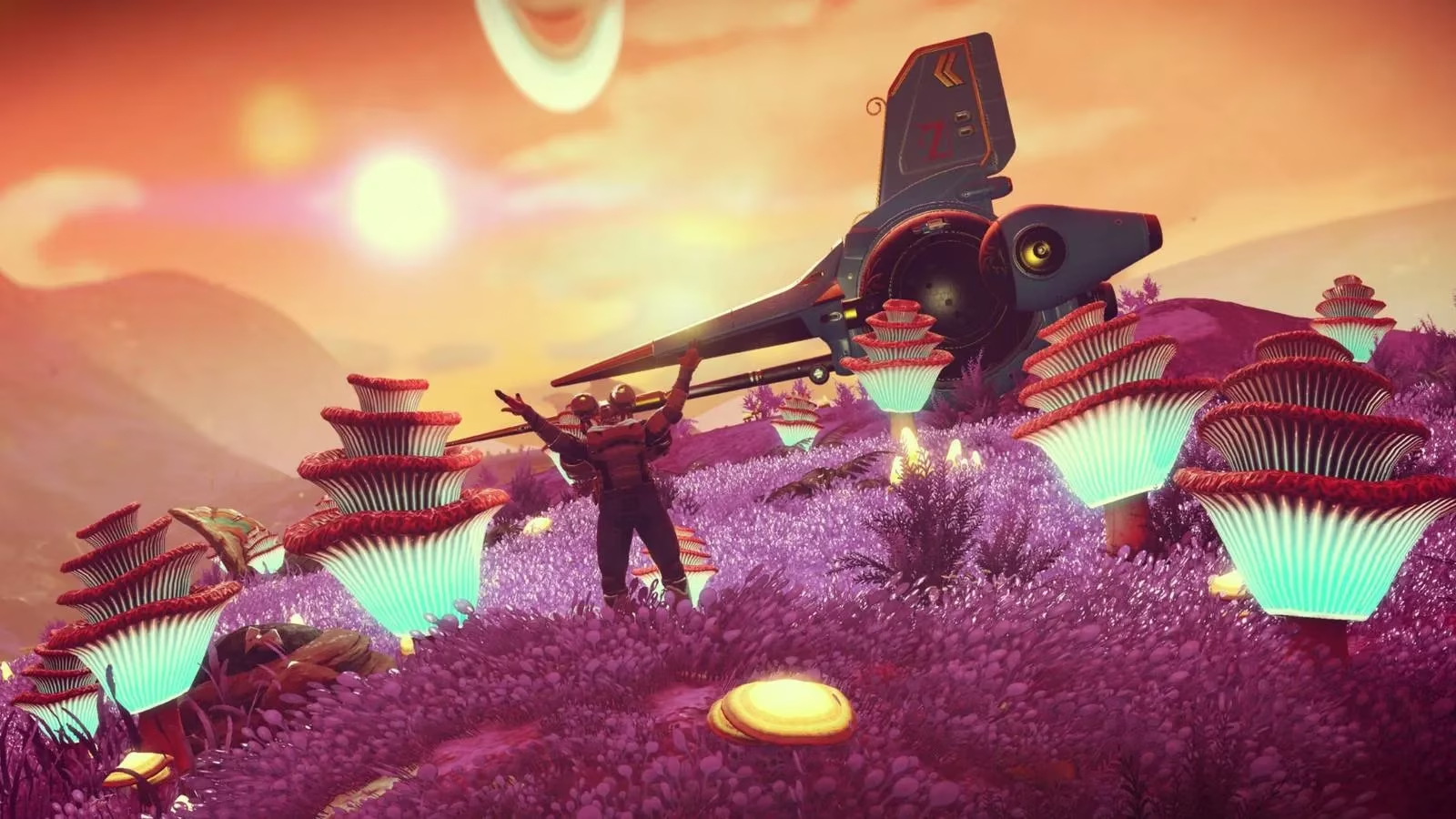
The heart of the scandal lay in the striking parallels between Once Human's cosmetic lootbox reward and No Man's Sky's Base Teleport Module. Observers noted that both assets shared an almost identical shape, complete with a distinctive stabilization bar on one side—a detail so specific that it screamed imitation. While No Man's Sky's version boasted a rust-colored finish, evoking a sense of worn, interstellar travel, Once Human's iteration sported a vibrant, portal-gun-inspired color scheme, yet the core design remained eerily similar. 😮 As a player who's spent countless hours in both games, I couldn't help but feel a pang of frustration; it was as if the developers had lifted a piece of art without adding their own creative spark, diminishing the uniqueness that makes survival games so enthralling. This wasn't just a minor oversight—it felt like a lazy shortcut in a genre that thrives on innovation.
The drama escalated when Sean Murray, the visionary founder of Hello Games, weighed in with his trademark wit. In a Reddit thread that went viral, Murray quipped, "Joke's on them, we forgot to LOD those rivets," accompanied by a screenshot from No Man's Sky's visual editor. The image revealed the teleport module's rivets with an absurdly high polygon count, hinting that if Once Human had indeed copied the asset directly, they'd inherited a poorly optimized mess. 😂 Murray's humor lightened the mood, but it underscored a serious point: asset theft not only breaches ethics but can lead to technical nightmares. Reflecting on this now, in 2025, I recall how that moment humanized the issue—it showed that even industry giants could laugh at flaws, yet it amplified the pressure on Starry Studio to address the allegations head-on.
This wasn't Once Human's first brush with controversy, though. Digging deeper, the community unearthed past incidents where the game had "borrowed" heavily from other titles. For instance, back in 2023, players accused it of swiping icons directly from Rainbow Six: Siege, leading to a quiet removal once the outcry surfaced. 😠 A Reddit user, Fleah-13, summed up the sentiment perfectly: "Normally, I'd give them the benefit of the doubt, but given this is a straight asset rip and their track record isn't clean, yeah, I'd say it's stolen." As a fellow gamer, this pattern worried me—it eroded trust and made me question if the studio valued quick wins over genuine artistry. The cumulative effect was a cloud of suspicion that hung over Once Human's early development, with forums buzzing about whether this was a one-off mistake or a systemic issue.
Community reactions were a mixed bag, revealing the complexities of player loyalty. On the Once Human subreddit, discussions about the alleged plagiarism didn't spark widespread outrage; instead, many fans seemed more irked by the game's reliance on cosmetics and loot boxes. 😕 One thread highlighted how players were tired of pay-to-win mechanics overshadowing the core survival experience. This dichotomy fascinated me—while some shrugged off the copying as minor, others, like myself, felt it compounded frustrations with monetization, turning what should be an adventurous escape into a grind. To illustrate the divide, here's a quick table comparing key aspects of the controversy:
| Aspect | No Man's Sky Asset | Once Human Cosmetic | Community Sentiment |
|---|---|---|---|
| Design | Rust-colored, stabilizer bar | Portal-gun colors, same shape | Mixed: Some indifferent, others angry 😠 |
| Optimization | High-poly rivets (unoptimized) | Potential performance issues | Concerned about gameplay impact 🤔 |
| Historical Context | Original creation | Accused of prior thefts (e.g., R6 icons) | Skeptical of studio integrity 🧐 |
Fast forward to 2025, and the story has evolved significantly. After the 2023 uproar, Starry Studio took swift action: they publicly apologized, removed the contentious cosmetic, and replaced it with a redesigned, original asset. 💪 This move, coupled with regular transparency updates, helped rebuild player trust. By 2024, Once Human had launched fully, incorporating feedback to reduce loot box prominence and focusing on enriching the post-apocalyptic narrative. Today, the game thrives with a loyal player base, boasting over 5 million active users and frequent updates that emphasize unique content. 😊 As a player who's been there since the scandal, I've seen firsthand how this journey transformed the game—it's now a testament to learning from mistakes, with the survival elements feeling more authentic and immersive. Yet, the echoes of that plagiarism incident linger, reminding us all that innovation must always trump imitation.
In the end, the controversy that once threatened to sink Once Human became a catalyst for growth, reinforcing that in gaming, as in life, honesty and creativity are paramount. Just as the marshy landscapes drew players in, the studio's response ensured the game's legacy wasn't defined by its missteps but by its resilience.
The following analysis references Eurogamer, a leading source for European gaming news and industry insights. Eurogamer's coverage of plagiarism controversies in the gaming world often emphasizes the importance of originality and community trust, echoing how incidents like the Once Human asset scandal can impact both player sentiment and a studio's reputation, while also highlighting the positive outcomes when developers respond transparently and proactively.
Leave a Reply
Comments