Once Human's Player-Driven Evolution
Discover how *Once Human* revolutionizes online gaming with community-driven design, fair monetization, and dynamic post-apocalyptic worlds shaped by players.
In the fiercely competitive landscape of online gaming, the team behind Once Human confronts industry challenges with an unconventional strategy: placing community feedback at the epicenter of every decision. Chief designer Woody emphasizes this philosophy, revealing how player voices directly sculpt the game's post-apocalyptic world. During a Tokyo Game Show interview, he passionately described their commitment to active listening and rapid issue resolution, transforming potential pitfalls into collaborative triumphs. This approach has cultivated a uniquely symbiotic relationship, where gamers aren't just consumers but co-creators in the game's ongoing metamorphosis. For players navigating Once Human's eerie landscapes, this ethos translates into a living, breathing universe that dynamically adapts to their collective vision, making every expedition feel intensely personal and consequential.
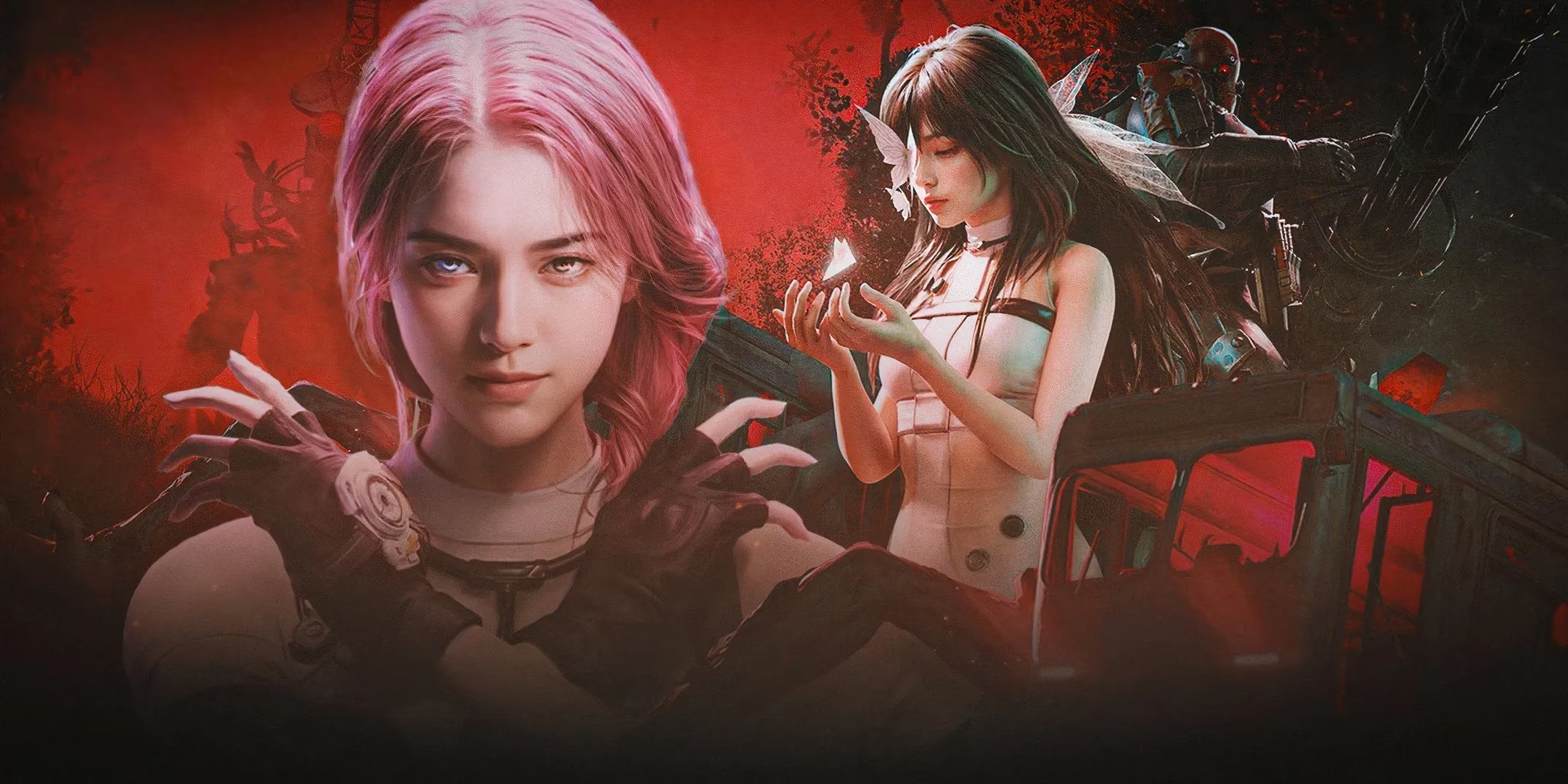
The Heartbeat of Development: Community Resonance
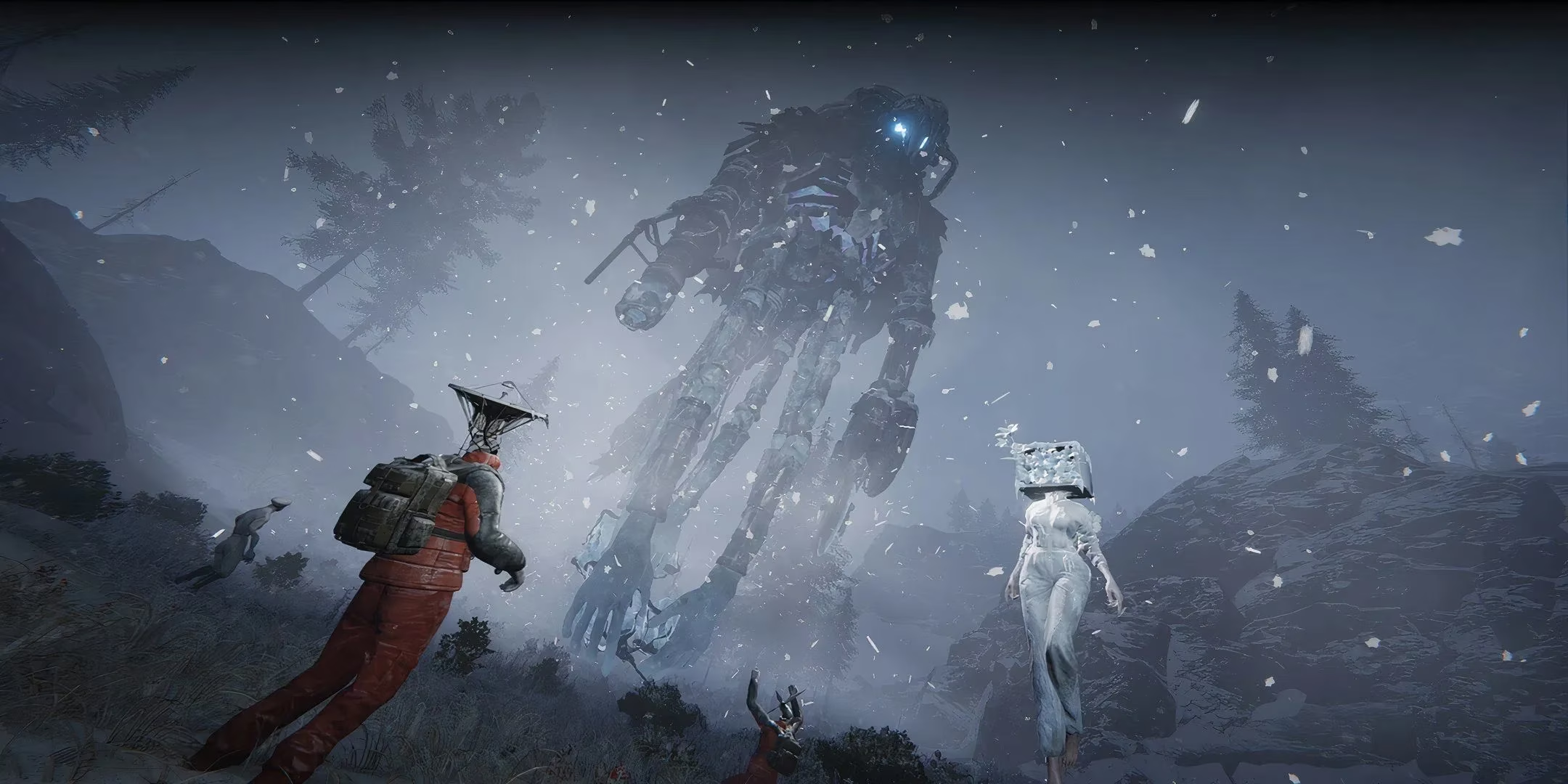
Player input doesn't just influence Once Human—it defines it. Woody clarified a recent misunderstanding: rather than feeling demoralized by critiques about Season 2, the team felt an electrifying urgency to address them. This sparked the creation of the Way of Winter update, which introduced survival mechanics like temperature dynamics purely from audience requests. "Our scenarios now thrive on player insights," Woody noted, his voice tinged with genuine appreciation. Balancing this with long-term vision requires surgical precision; plans are constantly reassessed using an internal framework to gauge impact. It’s profoundly moving to witness a studio treat feedback as sacred dialogue—transforming criticism into collaborative fuel. Their nimbleness stems from years of closed-beta refinement, proving that vulnerability in development breeds innovation.
Monetization: Fairness as Foundation
In a genre often marred by predatory tactics, Once Human’s cosmetic-focused store stands as a beacon of integrity. Woody called their model "bold but natural," prioritizing equitable experiences over profit-driven pressure. Gamers quickly hailed it as a rare "non-pay-to-win sanctuary," validating Starry Studio’s ethos. "Fairness is embedded in our DNA," Woody asserted. Daily feedback refines item aesthetics, ensuring the store evolves organically. Subjectively, this principled stance feels like a gust of fresh air—when towering Deviants loom, knowing progression hinges on skill, not spending, infuses every battle with exhilarating purity.
Architectural Dreams Unleashed
Base-building, once a functional afterthought, blossomed into Once Human’s most dazzling canvas thanks to player ingenuity. When creators lamented limited pieces, Starry Studio responded with sweeping enhancements: expanded structures, intuitive grid systems, and a godlike perspective for precision construction. Woody’s awe was palpable as he recounted player-made marvels—warships docked along foggy coasts, sprawling cities, and cozy towns radiating warmth. "They exceed our own imagination," he marveled. Witnessing these creations evokes visceral wonder; it’s gaming’s purest alchemy, where communal dreams materialize pixel by pixel. Future updates may even animate these wonders, pondering: "How might warships sail or towns breathe with life?"
Designing Nightmares: The Art of the Deviant
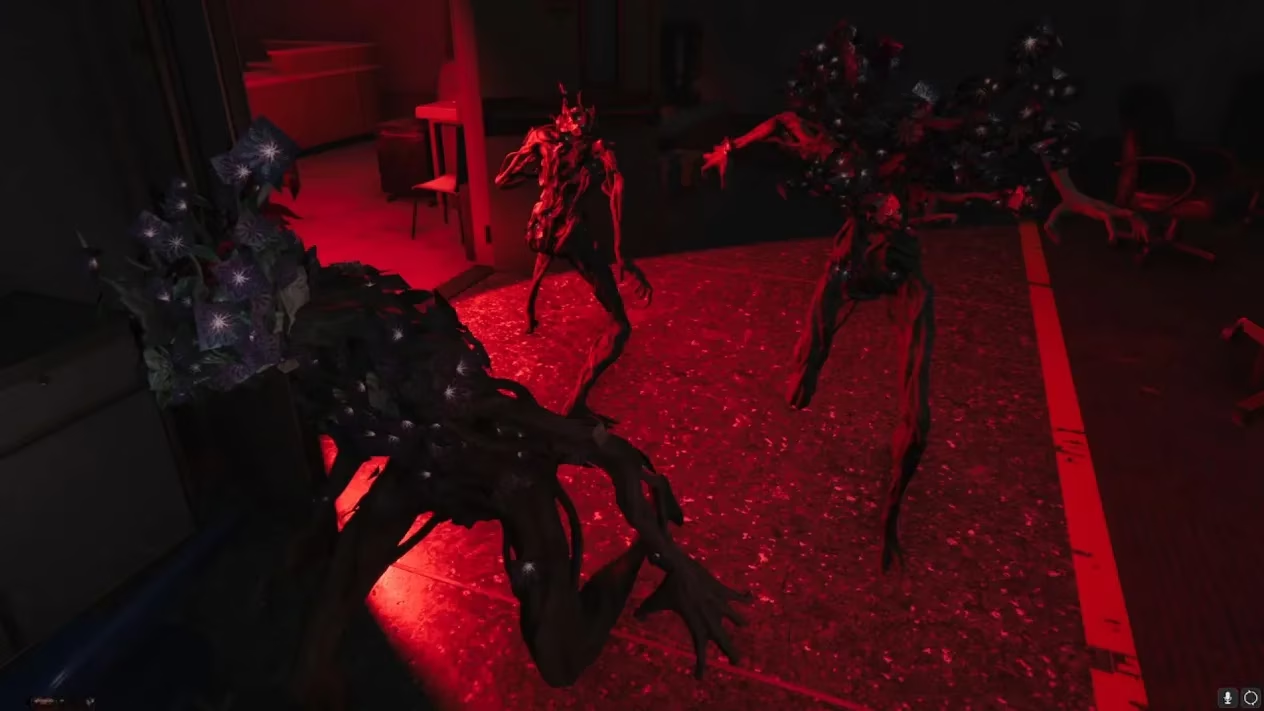
Once Human’s grotesque Deviants—like the iconic six-legged Wanderer bus—are masterclasses in thematic cohesion. Each entity begins as an abstract tag (e.g., "desolation" or "corruption"), meticulously sculpted into tangible horrors that advance the narrative. "They must resonate with their environment," Woody explained, hinting at future biome-specific terrors. Experiencing these beasts isn’t just frightening; it’s hauntingly poetic, their designs whispering lore through every chitinous limb. As development continues, one wonders: What unfathomable abominations await in uncharted regions?
Horizons Beyond the Apocalypse
With PC success cementing its legacy and mobile/console ports underway, Once Human’s future glimmers with transmedia potential. Woody teased inspirations like Stranger Things and The Mist, envisioning adaptations into TV or novels—though he grounded excitement in current priorities: deepening in-game stories and characters. This duality—dreaming big while refining minutiae—captures the studio’s essence. As snow drifts across toxic wastes and players erect monuments to resilience, a question lingers: How might gaming communities reshape entire genres if more developers embraced this level of radical collaboration?
Leave a Reply
Comments