Server Chaos in Once Human: What Really Happened and How the Devs Responded
Once Human server outage highlights launch risks for free-to-play survival games, with backend failures and player frustration shaping its legacy.
In July 2026, the free-to-play survival title Once Human remains a vivid case study in how a major online launch can be derailed by infrastructure failures. When the game first arrived on PC and mobile platforms on July 9, 2024, it immediately attracted a massive audience, but that influx quickly overwhelmed the backend. Within days, players faced queue times that stretched for hours, and by July 13, a complete server outage triggered a wave of confusion and frustration across the community. The events that unfolded over those critical hours still echo in player discussions today, serving as a reminder of the fragile line between a promising launch and a reputational crisis.
Once Human entered the market with a distinctive blend of post-apocalyptic survival and supernatural elements, drawing in thousands of players eager to explore its open world. On Steam alone, the game accumulated over 18,000 reviews in just four days. However, the initial reception was mixed even before the server meltdown. Players voiced concerns about data privacy, the monetization model for cosmetic items, and a territory-expansion mechanic that felt restrictive. Only 64 percent of those early reviews were positive, setting a tentative tone that would soon be hardened by technical turmoil.
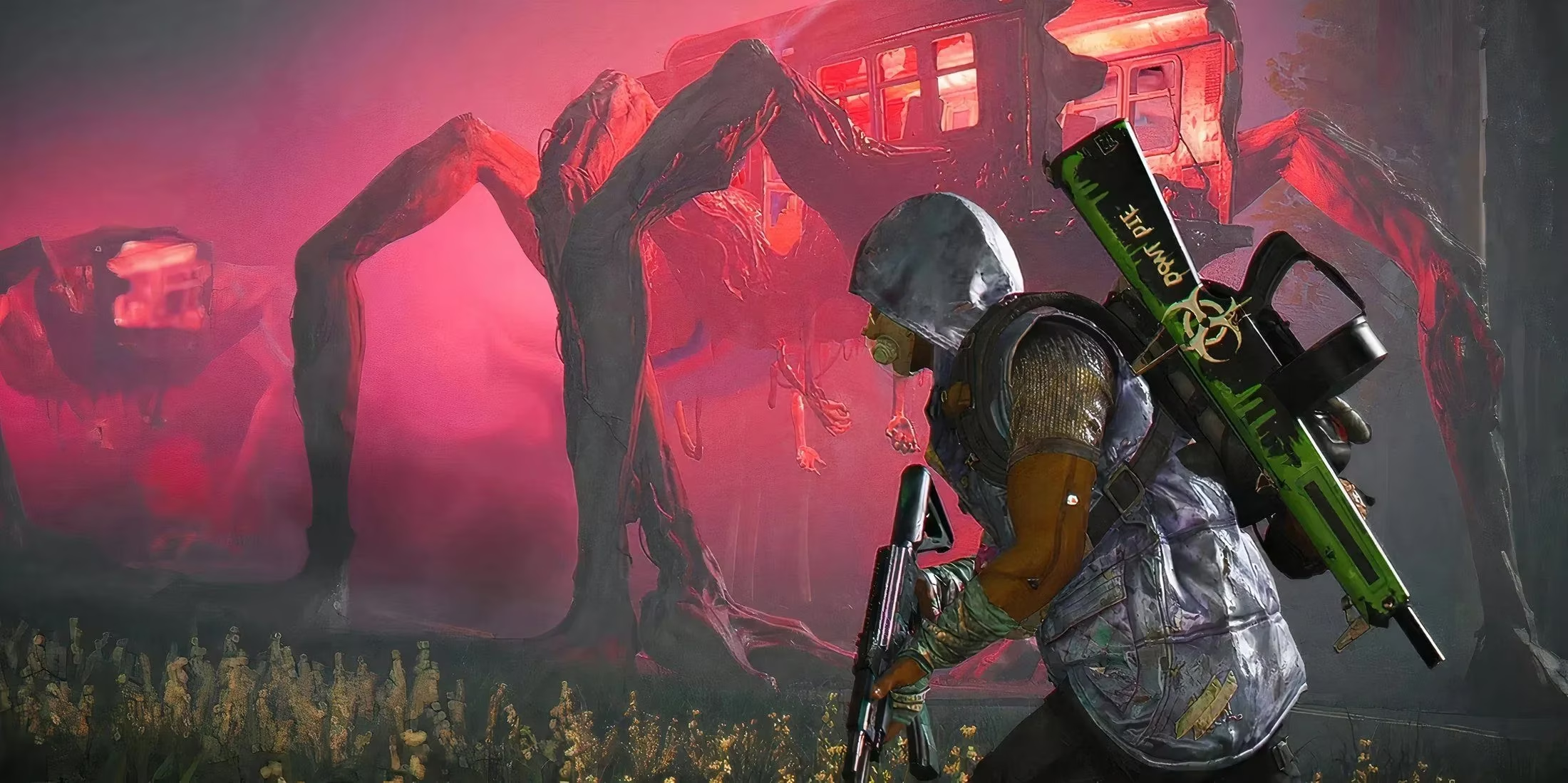
On July 13, 2024, Starry Studio acknowledged through the game’s official Twitter account that queue times on certain servers had become unacceptable. In an effort to alleviate pressure, the team increased server capacity limits to allow more concurrent logins. This quick fix was not without risk; the developers cautioned that pushing capacity higher could lead to resource scarcity on maps and prevent players from expanding their claimed territories. As a stopgap, they urged players to migrate to less-populated servers until the queues normalized. The communication was transparent but also hinted at deeper architectural limitations.
Within minutes of that announcement, an even greater crisis emerged. Players across multiple regions reported that all servers had gone offline simultaneously. Twitter and Discord channels flooded with screenshots of failed connection attempts, and confusion mounted when some users noticed that their season progress was not tracking correctly. Far more alarming were reports of vanishing characters. One player’s desperate query—“What do we do if our character is just gone? Like, almost 29 hours of progress just seemingly gone”—captured the chaos and underscored the emotional stakes. For many, the fear of permanent progress loss turned a technical outage into a deeply personal concern.
The response from Starry Studio was swift by industry standards. Just 15 minutes after the initial acknowledgment of the outage, the team announced they had localized the issue and begun repairs. While they did not immediately confirm whether any character data had been permanently wiped, they promised compensation rewards for those affected once repairs were complete. The nature of that compensation was left unspecified, but the gesture signaled accountability. Behind the scenes, engineers likely scrambled to diagnose a cascading failure that appeared to have knocked out authentication services, database sync, and instance management simultaneously.
In the years since, Starry Studio has demonstrated a long-term commitment to stabilizing Once Human and rebuilding trust. The server architecture was overhauled in late 2025, introducing dynamic scaling regions and cross-server character backup. Today, in 2026, queue times are virtually nonexistent, and the catastrophic July 13 outage is remembered as the catalyst that forced a comprehensive infrastructure review. The studio continues to maintain open channels with players through official social media, encouraging reports of even minor issues. The incident also prompted a more robust compensation framework: any future downtime now automatically triggers in-game bonuses like experience boosters and cosmetic currency, applied without the need for manual claims.
Reflecting on the July 2024 crisis, it is clear that Once Human’s early struggles were as much about rapid growth as they were about technical preparedness. The game’s hybrid nature—part survival sandbox, part narrative-driven adventure—attracted a sprawling player base with varying expectations, and the servers buckled under the collective demand. The developers’ real-time communication during the outage, while imperfect, provided a blueprint for damage control that many live-service titles have since adopted. The mix of acknowledgement, regular updates, and eventual recompense helped prevent a mass exodus, and the game’s active player count today consistently ranks among the top 20 free-to-play titles on Steam.
Ultimately, the server meltdown of July 2024 did not define Once Human; instead, it highlighted the resilience of both the development team and the community. New players joining in 2026 will find a polished experience with minimal friction, but the veterans still swap stories of queues that stretched to four digits and characters that briefly blinked out of existence. Those memories, now softened by time and a stream of content updates, serve as a testament to how a live-service game can recover from near-disaster through transparent engineering and sustained dedication.
Leave a Reply
Comments