The Elusive Silver Ore in Once Human: A 2026 Guide to Finding and Using It
Once Human Silver Ore guide reveals elusive spawn mechanics and expert tips for identifying and efficiently farming this rare resource.
As a dedicated Once Human player in 2026, I've spent countless hours exploring the vast, post-calamity landscapes, and I can tell you firsthand that mastering the game's resource economy is key to survival and progression. We all know the drill for common ores: head to a marked area on the map, mine until your pickaxe breaks, and stockpile for crafting. But what about the materials that don't play by the rules? What about the ones that force you to truly observe your environment? That's where Silver Ore comes in—a resource that has remained as elusive and intriguing as it was when the game first launched. It's not just another item to farm; it's a test of a player's patience and attention to detail.
The Hunt for Silver: A Game of Chance and Observation
So, where exactly do you find this precious metal? Is there a secret cave or a mountain peak teeming with silver veins? The frustrating—and fascinating—answer is no. Unlike its predictable cousins like Iron or Copper, Silver Ore doesn't have a fixed spawn location. Its defining characteristic is its randomness. Silver can literally spawn in the location of any other ore in the game. This means your hunt for silver is a global endeavor, spanning from the humble starting zones all the way to the most dangerous, high-level regions. Every time you swing your pickaxe at a rock, there's a small, thrilling chance it might yield silver instead of the expected material. This mechanic hasn't changed over the years; if anything, it's become a cherished quirk of the game's resource system.
Of course, this leads to the obvious question: how do you even recognize it? I remember my first few weeks, blindly mining every gray rock I saw. Silver Ore bears a strong resemblance to the more common Tin Ore, which can be incredibly misleading. The key is in the subtle details. While both have a metallic, silvery sheen, the host rock for Silver is typically a shade darker. The most reliable visual cue, the one I always look for, is the shape of the ore deposit itself. Silver itself has triangular boundaries instead of square like Tin. It's a small difference, but once you train your eye to spot those sharp, geometric triangles amidst the rubble, your efficiency skyrockets. You stop mining every shiny rock and start hunting for those specific shapes.
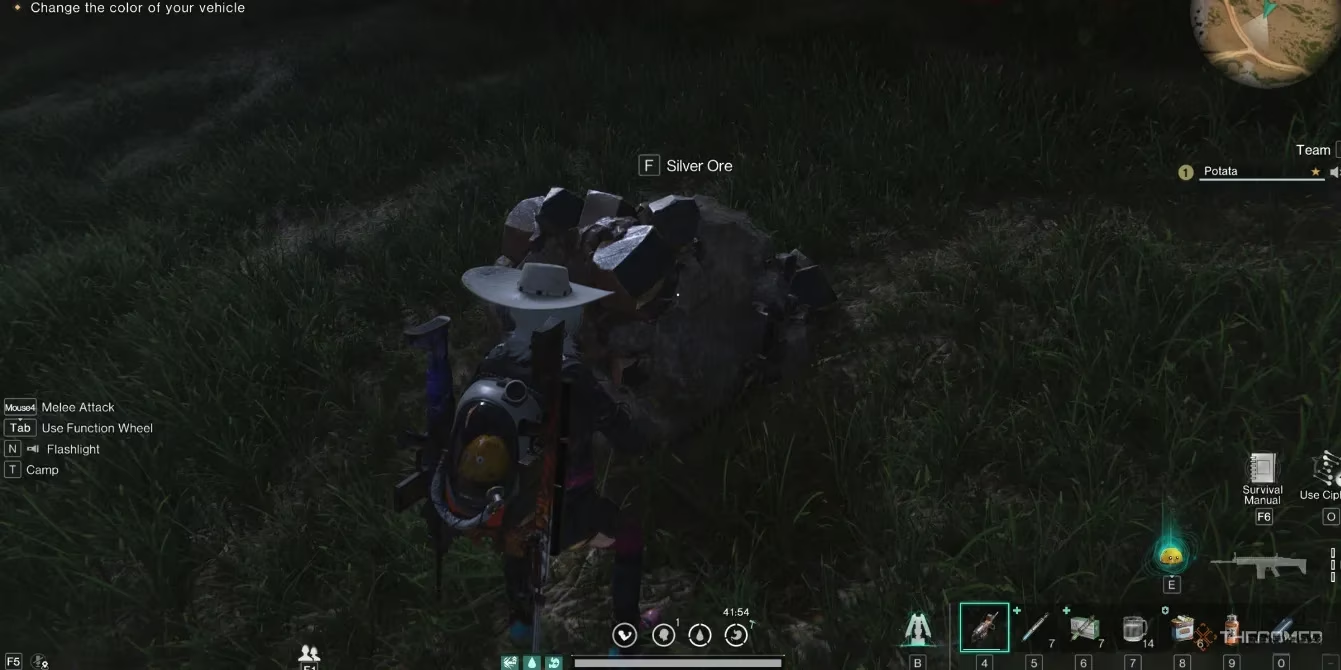
My personal strategy involves always carrying a high-durability pickaxe and making a habit of scanning ore nodes before I mine them, especially when I'm on resource-gathering runs for other materials. It turns a mundane task into a constant mini-game. Will this iron node surprise me with silver today? The anticipation never gets old.
From Useless Rock to Valuable Asset: Utilizing Your Haul
Let's say your keen eyes and persistent mining have paid off. You've returned to your Memetic safehouse with a stack of Silver Ore in your inventory. Now what? This is where many new players hit a wall. You might look at that stack and think, "Great! Time to craft some advanced gear!" But the reality is more nuanced. On its own, raw Silver Ore is surprisingly limited in direct use. You can't just plug it into a standard workbench and create something amazing.
The primary—and most valuable—path for Silver Ore is transformation. To unlock its true potential, you need to get lucky with a specialization that lets you craft it into Silver Ingots. These specializations are part of the game's deep progression system, often tied to specific Memetic archetypes or high-level crafting perks unlocked later in the game. If you possess this specialization, congratulations! You hold the key to turning rough ore into sleek, valuable ingots.
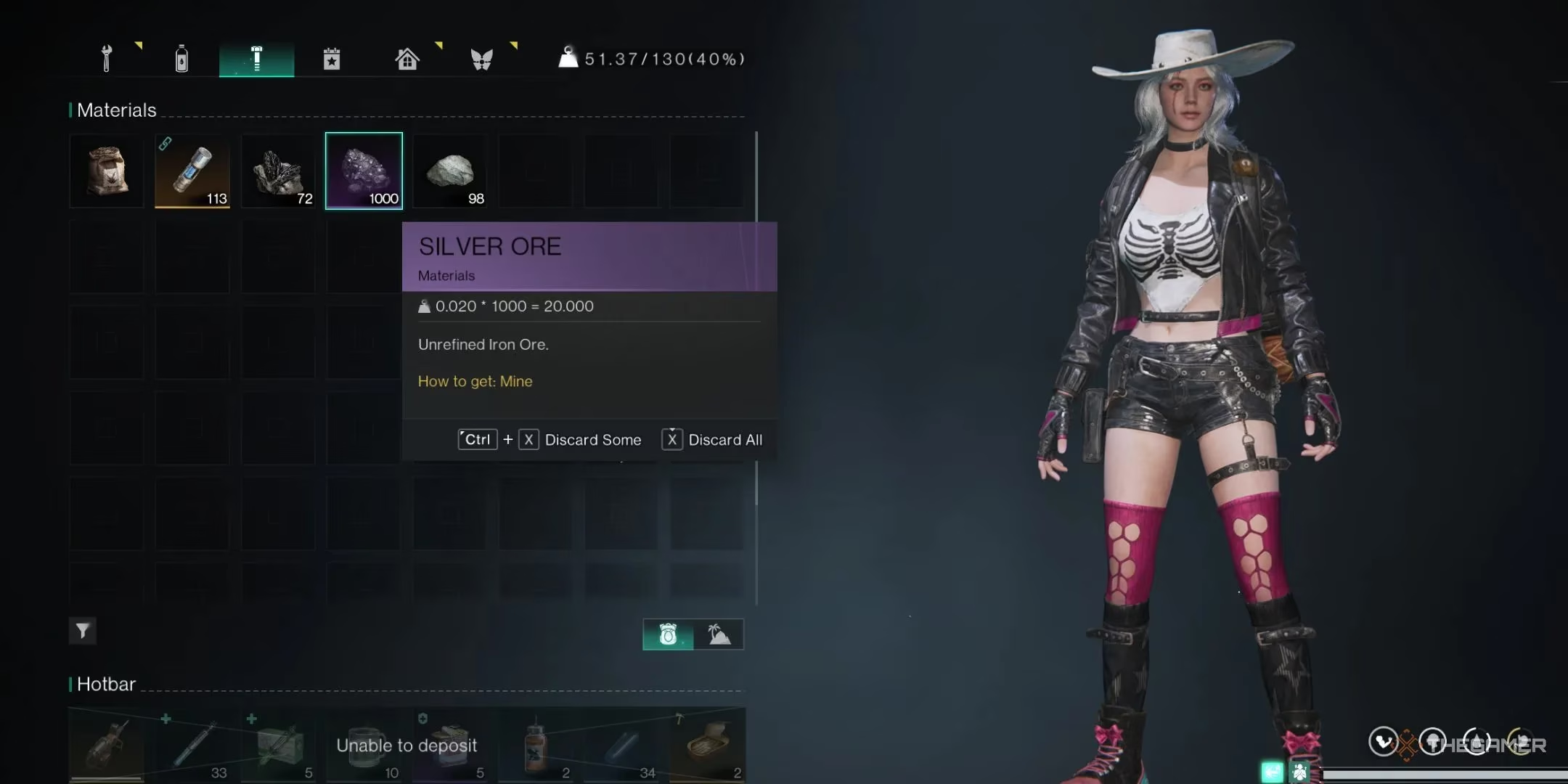
So, what can you do with Silver Ingots? Their applications are prestigious and highly sought after:
-
Crafting High-Tier Tools and Weapons: Historically, and still true in 2026, Silver Ingots are a crucial component for crafting superior axes and certain specialized weapons. These tools often have better durability, gathering speed, or unique combat effects.
-
Lucrative Trading: Merchant factions across the regions pay a premium for processed Silver Ingots. Selling them is one of the most reliable ways to earn a large sum of in-game currency quickly, funding other ventures or purchases.
-
Advanced Base Components: Some high-end base building modules or decorative items require silver as a material, signifying a player's advancement and resource wealth.
But what if you're sitting on a pile of silver and don't have that coveted specialization? All is not lost. You have two main options:
-
The Market Route: You can sell your raw Silver Ore on the player-driven marketplace or directly to other players. However, be prepared for this reality: you'll have to sell it for quite a low price since the ore itself is fairly useless without the perk. You're selling potential, not a finished product. It's a good way to clear inventory space and make some quick, modest funds.
-
Strategic Hoarding: I often advise players to store their silver. You never know when you might unlock the necessary specialization yourself, or when a close ally might get it. Having a reserve ready to be processed instantly is a powerful advantage.
There is one notable, direct use for the raw ore that has persisted: it's a required material for crafting special utility items like the Portable Fridge. This makes it a resource worth keeping a small stash of, even for non-specialists.
Final Thoughts from a Seasoned Survivor
In the end, Silver Ore in Once Human is more than just a crafting material; it's a philosophy. It teaches you that not all valuable things are found in obvious places. It rewards vigilance, patience, and collaboration within the player community. Whether you're a new survivor just learning to spot those triangular glints in the rocks, or a veteran smelter turning ingots into fortune, silver remains a timeless symbol of the game's depth. So next time you're out on a resource run, take an extra second to look at that ore node. Is it square, or is it triangle? That simple distinction might just lead you to a very profitable surprise.
Leave a Reply
Comments